



Bourne Estate, London
With 500 homes requiring new front doorsets, resident input and assurance was essential. Mulalley led the resident engagement process, supported by Grady Doors through the provision of full-size prototype doors and resident information packs.
Bourne Estate, London
As part of Mulalley’s wider programme of works for Camden Council, Grady Doors were appointed as manufacturer for a large-scale package to replace 500 flat entrance doorsets across the Bourne Estate in London. The replacement works formed a key part of Camden Council’s wider fire suppression upgrade.
Replacing fire doorsets on a listed property often requires careful negotiation between mandatory performance standards and the need for sympathetic, heritage appropriate design. Success depends on close collaboration between all stakeholders, including the residents, to ensure that sustainability, social value, safety, compliance and conservation requirements are met in equal measure.
As principal contractor, Mulalley coordinated the balance between resident needs, conservation requirements, programme delivery, quality assurance and fire safety obligations, working closely with Camden Council, Spicers, Grady Doors and other stakeholders.
Door Design: Preserving Architectural Character
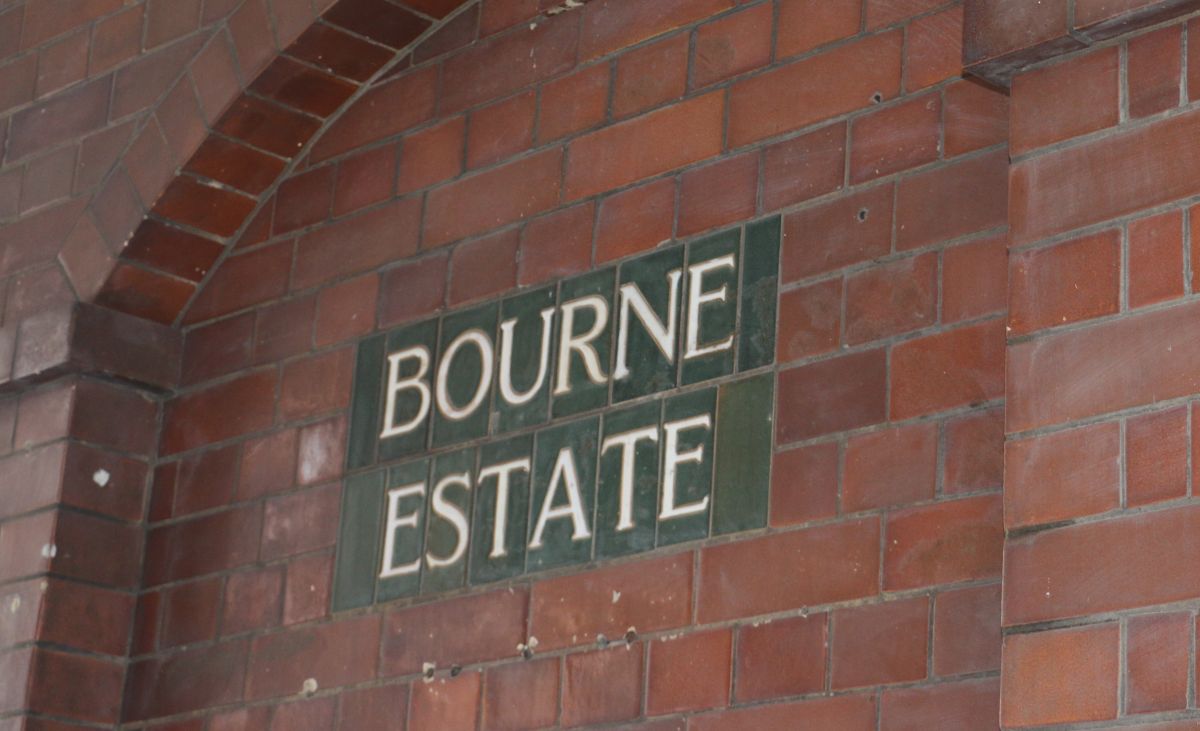
Most of the Bourne Estate was built between 1901 and 1909 and was conceived as a bold experiment in how architecture could create a community rather than simply a collection of dwellings. The majority of the estates residential blocks are now Grade II listed and located within the Hatton Garden Conservation Area. The flat entrance doorsets are highly visible from the open balcony walkways overlooking communal green spaces, making period aesthetic accuracy essential.
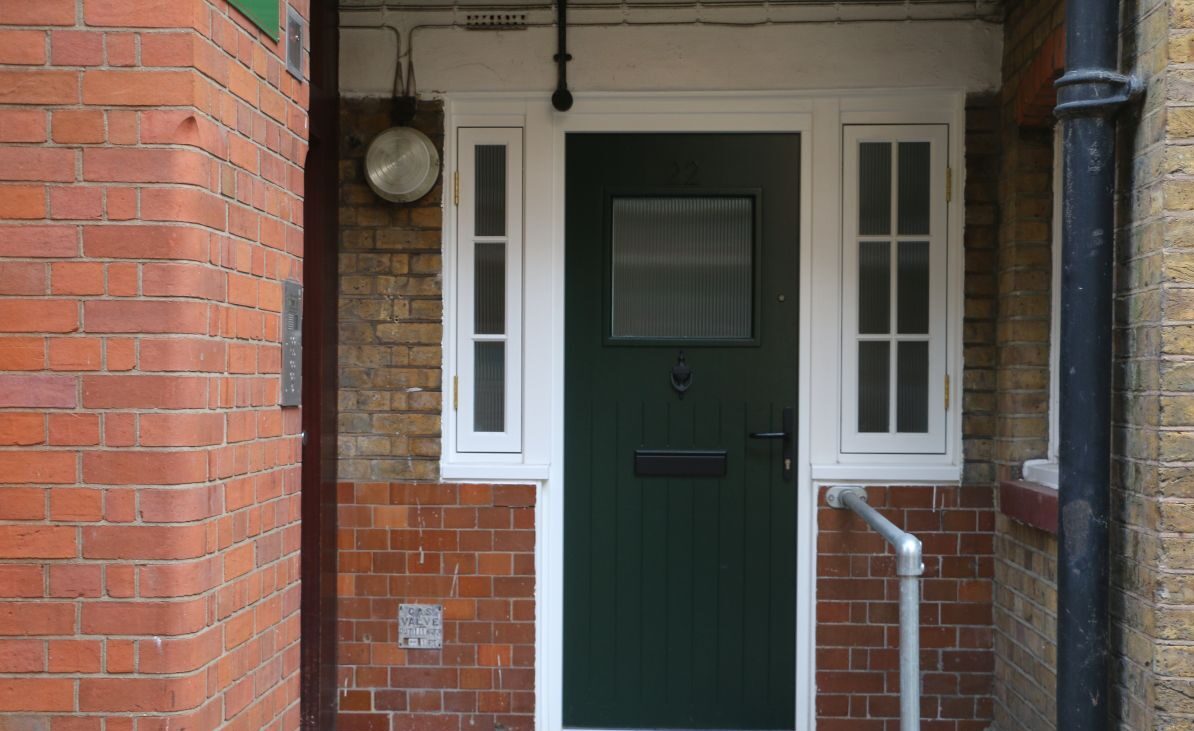
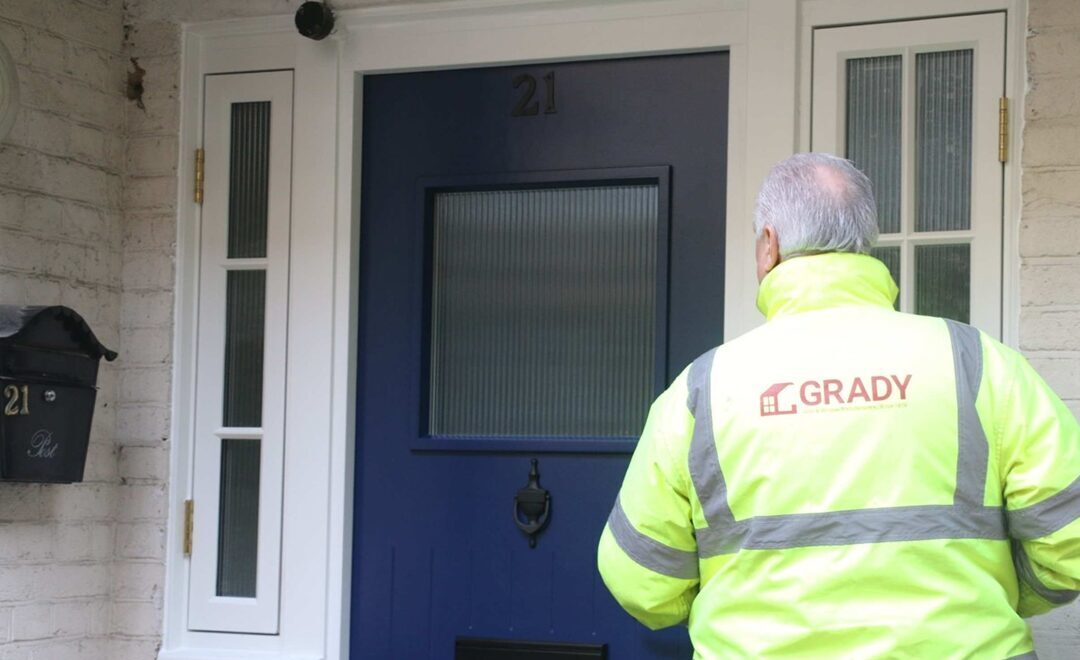
Whilst a number of doors had been replaced over the years, several original examples remained and were used to guide a design acceptable to the Conservation Officer. The approved design features a single leaf timber sash door with a rectangular glazed aperture fitted with vertical reeded glass – a period appropriate texture that maintains privacy while allowing the benefits of natural light into every dwelling. Matching reeded glazing was also required for the fanlights and sidelights, which also formed part of the fire safety upgrade.
The lower section of the door incorporated eight vertical grooves, echoing the traditional joinery of the original estate doors. All ironmongery – letterplate with internal security cowl, lever handles, door knocker, viewer and numerals – is finished in black, aligning with the understated, utilitarian aesthetic typical of estate architecture from the period.
Balancing Period Accuracy with Modern Performance
Closely replicating the appearance of the originals, the new flat entrance doorsets needed to achieve 30 minutes fire resistance and provide protection from smoke leakage at ambient temperature, in addition to providing enhanced security and thermal characteristics to meet contemporary requirements.
For enhanced weather performance, a sustainable timber rain deflector is fitted at the doors base, maintaining the visual language of the original. To meet enhanced security requirements, all doors include various attributes that are tested and certified as the complete doorset system to demonstrate performance – such as the multi-point locking system and door viewers.
The most significant challenge in meeting the replication-based specification was the reeded fire-rated glazing. Although Grady Doors operate an in-house fire glass cutting and processing line for fire resistant insulated glazed units, the reeded glass had not previously been tested within this specific door design.
To meet the brief, the Grady Doors Product Development and Product Stewardship teams devised and undertook a primary fire test programme for the complete doorset, achieving European framework classification to BS EN 13501-2.
The ironmongery selection for the Bourne Estate was approached with the same precision. Several ironmongery options were explored before the cross‑functional stakeholder team, including residents, technical specialists and the Conservation Officer, agreed a fully tested and certificated solution that balanced contemporary fire‑door performance with the estate’s architectural character.
Supporting Residents Through the Replacement Programme
With 500 homes requiring new front doorsets, resident input and assurance was essential. Mulalley led the resident engagement process, supported by Grady Doors through the provision of full-size prototype doors and resident information packs.
The main initial resident input associated with existing doors related to concerns around security and ease of operation, with some residents initially assuming new fire doorsets would be heavy or difficult to use. The prototypes demonstrated the cam action closer and the ability to finely adjust opening and closing forces and speed, showing that the new doors would open and close smoothly with minimal effort.
The prototypes also helped reassure residents about security, demonstrating the enhanced tested security features incorporated into the new Secured by Design accredited doorset system.
Residents contributed directly to the colour palette and ironmongery preferences, while the Conservation Officer provided the final heritage‑led steer, approving the black external finish and endorsing the resident‑selected door colours of red, green, blue and black. This collaborative process echoed the estate’s founding ethos: that when people are treated with respect and invited into the design conversation, the result is not only technically robust but socially meaningful.
Arthur Grady, Managing Director of Grady Doors, speaks of the value of collaborate working that really set this project apart:
“Listed buildings demand sensitivity, but they also demand certainty. Our role as fire doorset manufacturers is to ensure that heritage‑appropriate detail is backed by robust, repeatable test evidence. What made this programme special was the shared commitment from the contractors, installers, Conservation Officer and residents to get the equation right.
Working with the residents of the Bourne Estate reminds me that great housing is never just brick and timber, it’s the promise we make to future generations and communities.”
Installation and Maintenance Support
To further support the programme, Grady Doors delivered specific Golden Thread doorset installer training to the Spicers team. This provided an evidenced-based process to help reassure residents that installation would be carried out to the required standard, with minimal disruption.
You May Also Like


